
There are others better qualified than I am to write and speak intelligently and knowledgeably about Gunter Hampel, his music, and his significance for the German and American jazz scenes. I can only write a little about my personal experiences with a man who was one of the fathers- if not the father- of German free jazz, and whom I greatly admired as a young musician in the late ’60s and early ’70s, and even later.
Our first encounter was in Moers at the Röhre; there I approached him and asked if he would have a little time the next day to give me some advice. Admittedly, I hardly understood anything he told me about music. “Be curious, follow your own path, and stay positive.”
I ran into him again in 1970 in New York (I was working in West Virginia for a German mining supply company and had gone there for a weekend to visit my first flute teacher) while taking a walk through the city; there he was, standing on a street corner, playing his bass clarinet. From 1972 to 1977, I lived in Cologne above the Päff jazz club on Friesenwall, where he performed with his Galaxy Dream Band. Unfortunately, we hardly had any contact—the band had their backstage area in my rehearsal space under the Päff, the atmosphere wasn’t great, and there were a lot of drugs going around.
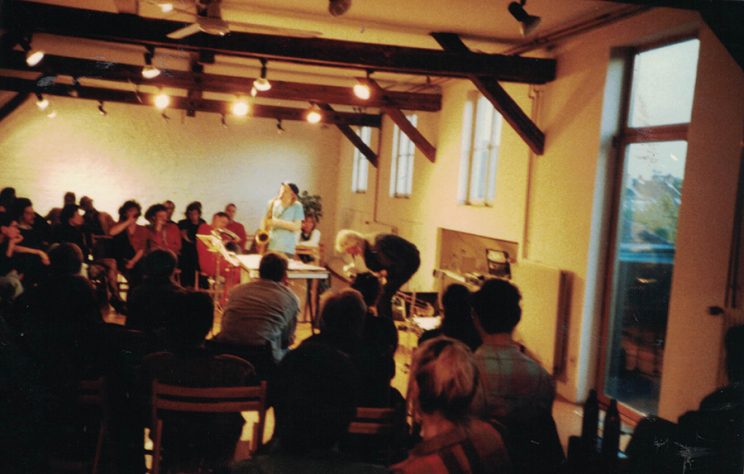
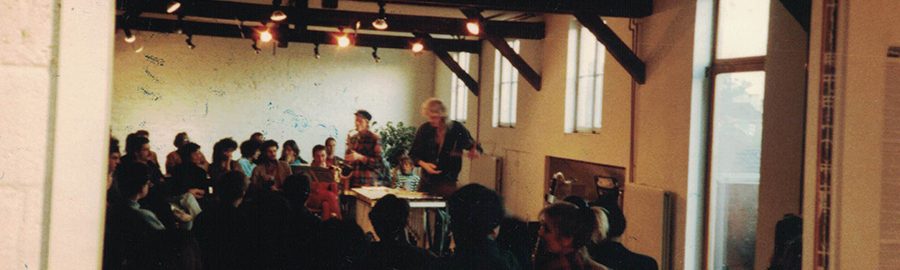
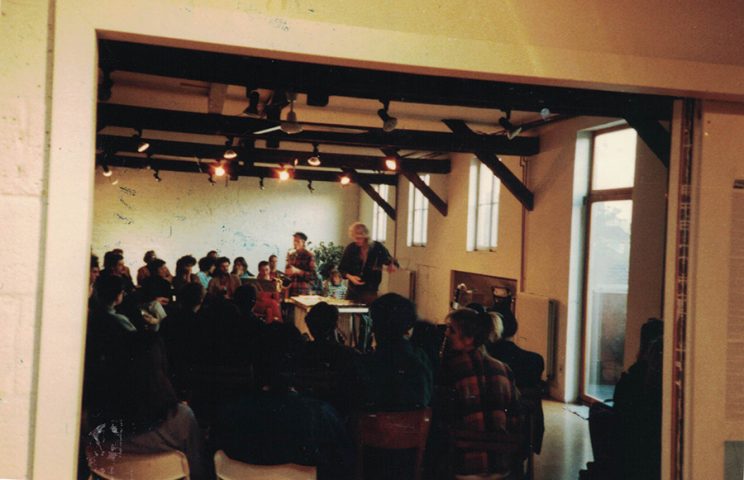
When I started a regular program at the LOFT in 1989, he was actually the first “well-known” jazz musician to play with us in June 1990 (in a duo with Matthias Schubert).
The Radical Wing of Loft Jazz (in New York City)
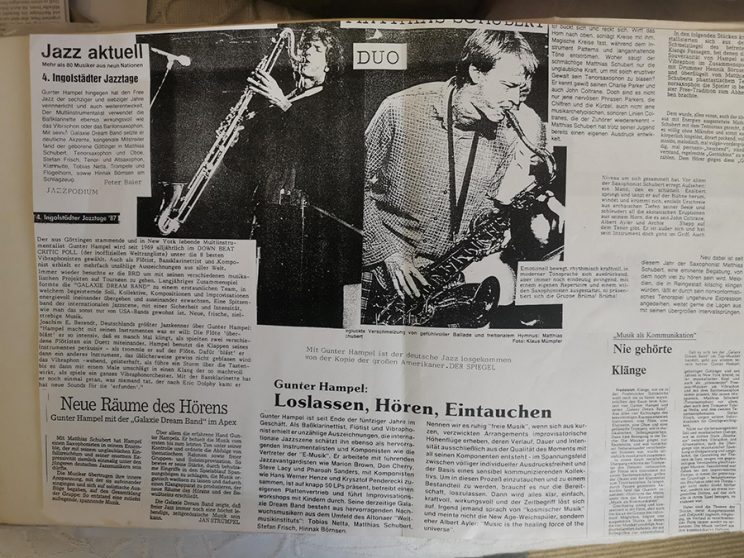 Through Karl Wiemann, a lawyer from Moers who owned an incredible record collection, I also came to know the music of Marion Brown, Don Cherry, and Cecil Taylor- music that the TAZ described in its obituary for Gunter as the radical wing of the New York loft jazz scene, a scene to which Gunter Hampel also belonged, perhaps the only German musician, alongside vibraphonist Karl Berger, to have played a significant role in New York.
And since I had chosen the name LOFT for my venue specifically in reference to that era – I had told Gunter this – I was thrilled to now hear him play at my LOFT. He was also one of the musicians who had a “wild card” at the LOFT, meaning he could definitely play with us whenever we could free up a slot.
He ended up playing with us often and even stayed at the LOFT with his musicians.
I will never forget our conversations after the concerts. He was not an easy person to talk to, with very unconventional views; in recent years he had sometimes fallen a bit out of step with the times, but he was always a musician through and through, for whom there were no musical taboos or boundaries, and for whom “jazz” was also a way of life. And because he always sought out young musicians, he wanted to pass on this way of life to them—one of his projects was called “The Next Generation.”
Dear Gunter,
this attitude, along with your music, was the defining feature of your unmistakable personality; I – we – will miss it.
requiescat in pace
Hans Martin