


Theorie des Ensembles: Brinkmann / Sprangers / Thomé feat. Nguyên Lê
Dienstag 26. Mai 2026 - 20:00
Veranstaltung Navigation
Jörg Brinkmann – Cello
Kika Sprangers – Saxophon
Christian Thomé – Schlagzeug
special guest: Nguyên Lé – Gitarre
(english: see below)
Weitere Informationen zu den Preisen, Karten-Reservierungen und den Öffnungszeiten finden Sie hier.
Die Geometrie des Einklangs
Im Jazz ist die Zahl drei mehr als eine bloße Ziffer. Sie bildet die kleinste Einheit der Demokratie, ein fragiles Gleichgewicht, das ständig nach Auflösung strebt. Die Theorie des Ensembles meint nicht die trockene Übung der Mengenlehre (französisch: théorie des ensembles), sondern die Magie, die entsteht, wenn sich drei musikalische Biografien zu einem einzigen, lebendigen Klangkörper vereinen.
Das Trio aus Kika Sprangers, Jörg Brinkmann und Christian Thomé ist ein Experiment über Freiheit. Es verkörpert das grenzübergreifende Paradoxon einer Musik, die ihre Grenzen kennt – nur um sie im Moment des Spiels genussvoll zu überschreiten.
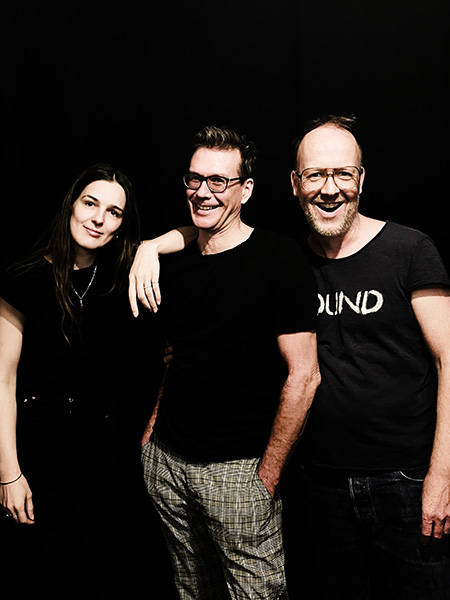
Die Protagonisten der Schnittmenge
Christian Thomé am Schlagzeug gibt nicht den Takt vor, sondern forscht im Rhythmus, wie ein akustischer Alchemist, ganz Mad Scientist, wie ihn manche nennen. In seinem Spiel steckt stets forschende Neugier, er jongliert mit Gegensätzen und erzeugt Groove, wo er am wenigsten erwartbar ist. So wissenschaftlich wie emotional vereint er die archaische Wucht der Perkussion mit der Feinheit moderner Klangforschung.
https://www.christianthome.de/
Ihm gegenüber steht Kika Sprangers. Ihr Saxofonspiel trägt die ganze Geschichte der Jazz-Improvisation in sich. Als „Upcoming Talent“ aus Amsterdam beeindruckt sie mit einer Reife, die ihre Jahre weit übersteigt. Ihr Sound ist mehr als Klang: Er erzählt Geschichten, die sich mühelos in die komplexen Strukturen ihrer Mitspieler einfügen.
Das verbindende Element – oder vielleicht der Katalysator – ist Jörg Brinkmann. Sein Cello bleibt im Jazz eine Seltenheit, ein Grenzgänger zwischen Klassik und improvisierter Moderne. Brinkmann schöpft die Vielfalt seines Instruments aus, erweitert sie und schafft harmonische Überlagerungen. Durch sein Spiel klingt Theorie des Ensembles mal wie Kammermusik, mal wie Avantgarde und mal wie – ein Jazztrio.
Das Amalgam des Augenblicks
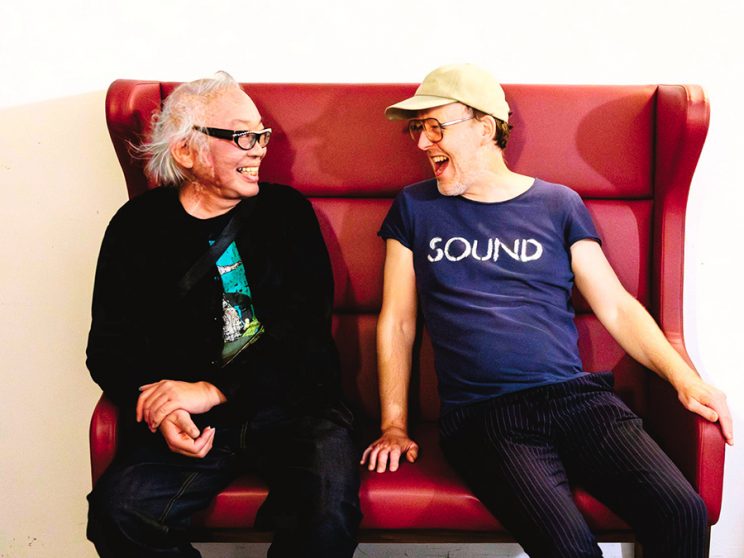
Das Trio Theorie des Ensembles hält nicht viel von strenger Mengenlehre. Das Konzept ist offen für Ergänzung, Erweiterung und Reibung. Ihr erster Gastmusiker ist Nguyên Lê, von dem die FAZ einmal schrieb: „So wie er spielt niemand Gitarre.“ Die JazzTimes stellte ihn sogar in eine Reihe mit John Scofield und Bill Frisell. Lê und Sprangers spannen einen generationsübergreifenden Bogen, Brinkmann und Thomé fügen sich biografisch ein. Das Ergebnis aber ist keine bloße Addition von Lebensläufen und Talenten – es ist die Schaffung eines ungeplanten, neuartigen, Neues wagenden Amalgams.
https://www.nguyen-le.com/Site_Nu/Bonjour.html
Wenn diese Musizierenden aufeinandertreffen, hinterfragen sie kulturelle Grenzen. Ihre Musik wagt den Spagat zwischen strenger Komposition und freier Improvisation. Sie lehnt das Nationale und stilistisch Festgelegte ab. In einer Welt, die mehr und mehr in unversöhnliche Teile zerfällt, beweist dieses Trio plus X das Gegenteil: Musik findet ihre größte Intensität in der Schnittmenge. Theorie des Ensembles ist mehr als ein Projekt. Es ist ein Versprechen, dass aus Eigenheit, Andersheit und Verschiedenheit leicht und spielerisch etwas Neues entstehen kann.
Diese Mengenlehre muss man nicht begreifen.
Man muss sie hören.
Klingt so:
ENGLISH
Jörg Brinkmann – cello
Kika Sprangers – saxophone
Christian Thomé – drums
special guest: Nguyên Lé – guitar
Further information about prices, ticket reservations and our opening times can be found here.
The Geometry of Harmony
In jazz, the number three is more than just a digit. It forms the smallest unit of democracy, a fragile balance that constantly strives toward dissolution. The theory of the ensemble does not refer to the dry exercise of set theory (French: théorie des ensembles), but rather to the magic that arises when three musical biographies unite to form a single, living body of sound.
The trio of Kika Sprangers, Jörg Brinkmann, and Christian Thomé is an experiment in freedom. It embodies the boundary-crossing paradox of music that knows its limits – only to delightfully transcend them in the moment of performance.
The Protagonists of the Intersection
Christian Thomé on drums doesn’t simply set the beat; instead, he explores the rhythm like an acoustic alchemist—a true mad scientist, as some call him. His playing is always driven by an inquisitive curiosity; he juggles opposites and creates groove where it’s least expected. With an equal measure of scientific rigor and emotional depth, he combines the archaic power of percussion with the subtlety of modern sound exploration.
https://www.christianthome.de/
Opposite him is Kika Sprangers. Her saxophone playing embodies the entire history of jazz improvisation. As an up-and-coming talent from Amsterdam, she impresses with a maturity far beyond her years. Her sound is more than just sound: it tells stories that blend effortlessly into the complex structures of her fellow musicians.
The unifying element—or perhaps the catalyst – is Jörg Brinkmann. His cello remains a rarity in jazz, a bridge between classical music and improvised modernism. Brinkmann draws on the full range of his instrument, expands its possibilities, and creates harmonic textures. Through his playing, Theorie des Ensembles sounds at times like chamber music, at times like avant-garde, and at times like—a jazz trio.
The Amalgam of the Moment
The Trio Theorie des Ensembles doesn’t think much of strict set theory. The concept is open to additions, expansions, and friction. Their first guest musician is Nguyên Lê, of whom the FAZ once wrote: “No one plays the guitar the way he does.” JazzTimes even placed him in the same league as John Scofield and Bill Frisell. Lê and Sprangers bridge a generational gap, while Brinkmann and Thomé fit in biographically. The result, however, is not merely a sum of résumés and talents – it is the creation of an unplanned, novel amalgam that dares to venture into the new.
https://www.nguyen-le.com/Site_Nu/Bonjour.html
When these musicians come together, they challenge cultural boundaries. Their music walks the tightrope between strict composition and free improvisation. It rejects the national and the stylistically fixed. In a world that is increasingly fracturing into irreconcilable parts, this trio plus X proves the opposite: music finds its greatest intensity at the intersection. Theorie des Ensembles is more than a project. It is a promise that something new can emerge easily and playfully from individuality, otherness, and diversity.
You don’t have to understand this set theory.